

MICRODOSING
Microdosing Schedule Explained (Fadiman vs Stamets) (2026)
Introduction
A microdosing schedule is one of the most important aspects of understanding how microdosing is discussed in psychedelic education. Rather than focusing only on the amount taken, schedules define how often doses are spaced over time.
Interest in microdosing routines has grown as researchers explore how psychedelic compounds interact with the brain and whether consistent low-dose exposure produces measurable effects.
While many people discuss microdosing schedules informally, scientific research into structured protocols is still evolving. Institutions such as Johns Hopkins University continue to study psychedelic compounds, though most clinical research focuses on controlled therapeutic doses rather than microdosing routines.
In this guide, we explain the most widely known microdosing schedules and how they are typically described.
What Is a Microdosing Schedule?
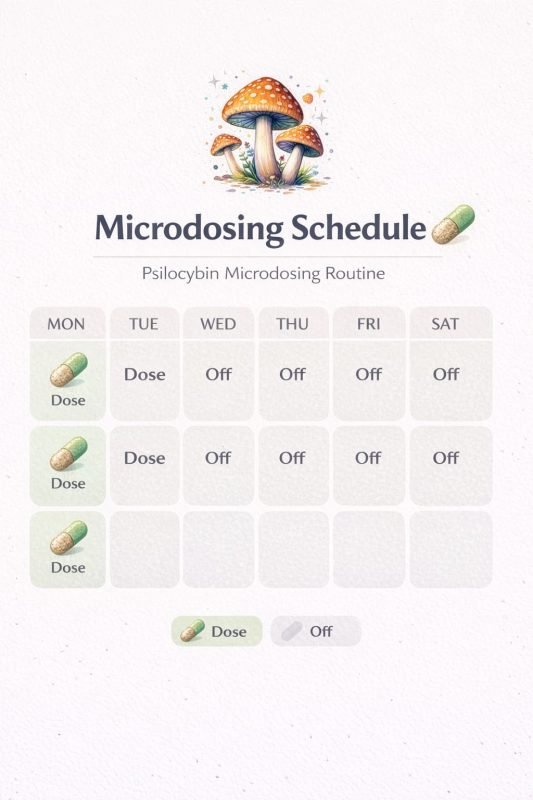
A microdosing schedule refers to the structured timing of when microdoses are taken and when breaks occur.
Unlike single-dose discussions, schedules emphasize:
- consistency
- spacing between doses
- rest periods
- observation over time
The goal of spacing doses is often described as allowing the body and mind time to reset between sessions.
Why Microdosing Schedules Matter
Microdosing schedules are discussed because timing may influence how repeated small doses interact with the body.
Some of the reasons schedules are emphasized include:
- avoiding continuous exposure
- allowing observation of effects
- reducing potential tolerance buildup
- maintaining structured routines
Because research is still developing, these practices are based largely on community discussions and observational reports, rather than standardized medical guidelines.
The Fadiman Protocol
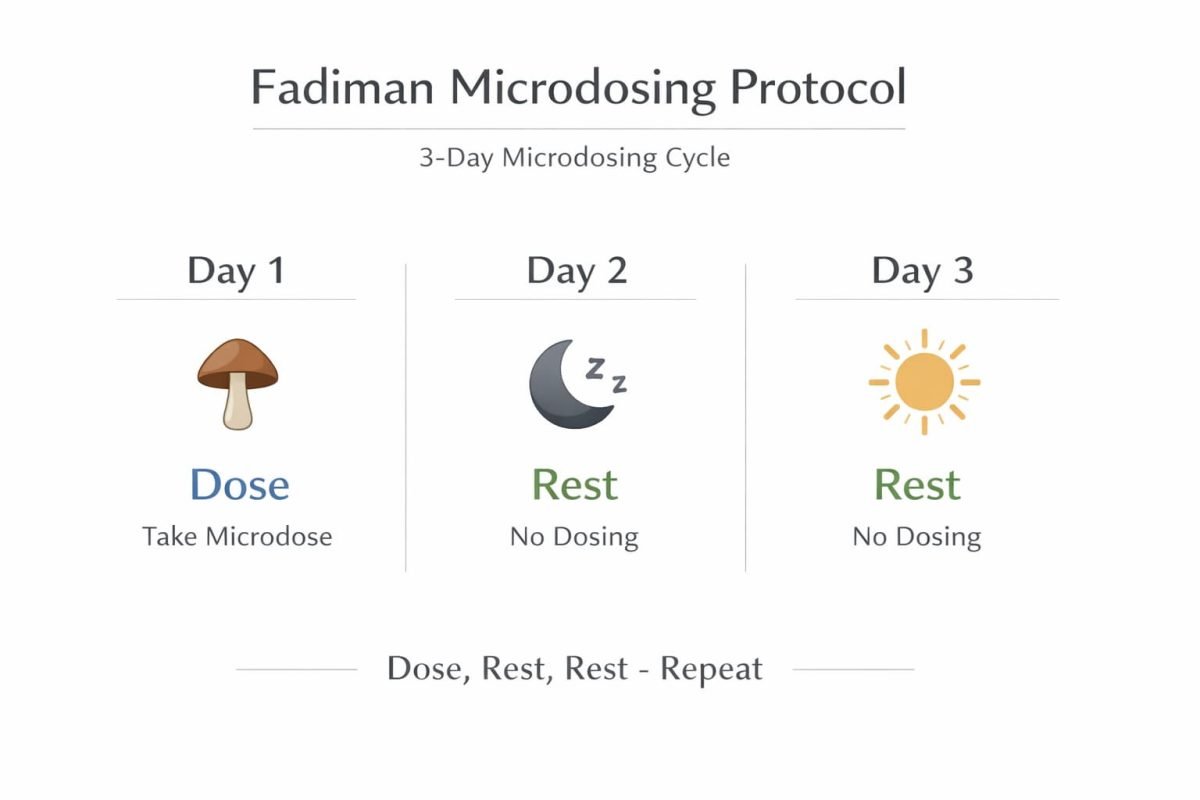
The Fadiman protocol is one of the most widely known microdosing schedules.
It follows a repeating 3-day cycle:
Day 1 – microdose
Day 2 – no dose
Day 3 – no dose
Repeat
Key Characteristics
- spaced dosing every three days
- rest days between doses
- focus on observation and reflection
This schedule is often described as allowing time between doses to observe subtle changes.
The Stamets Protocol
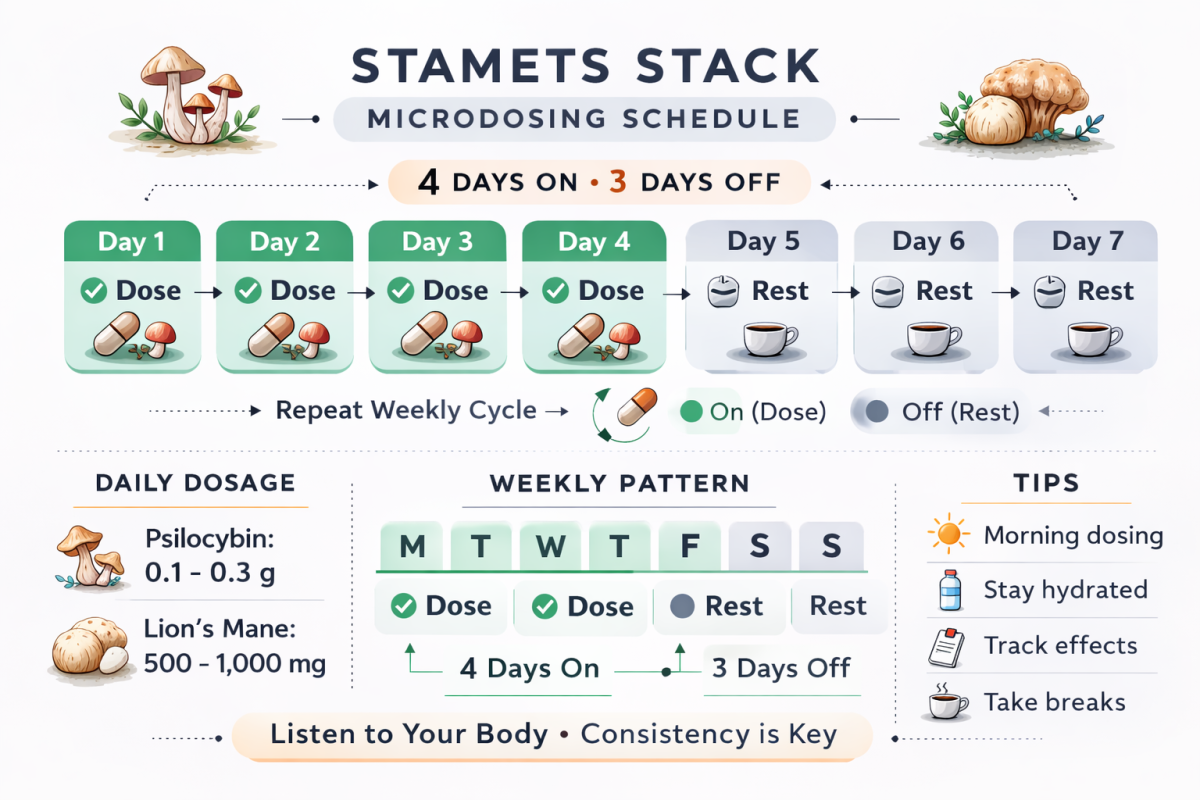
Another widely discussed schedule is the Stamets protocol, sometimes referred to as the Stamets stack.
It typically follows a weekly pattern:
4 days microdose
3 days off
Key Characteristics
- consecutive dosing days
- longer break period
- sometimes paired with supplements in discussion contexts
This protocol is often discussed as a more structured weekly routine.
Comparing Fadiman vs Stamets
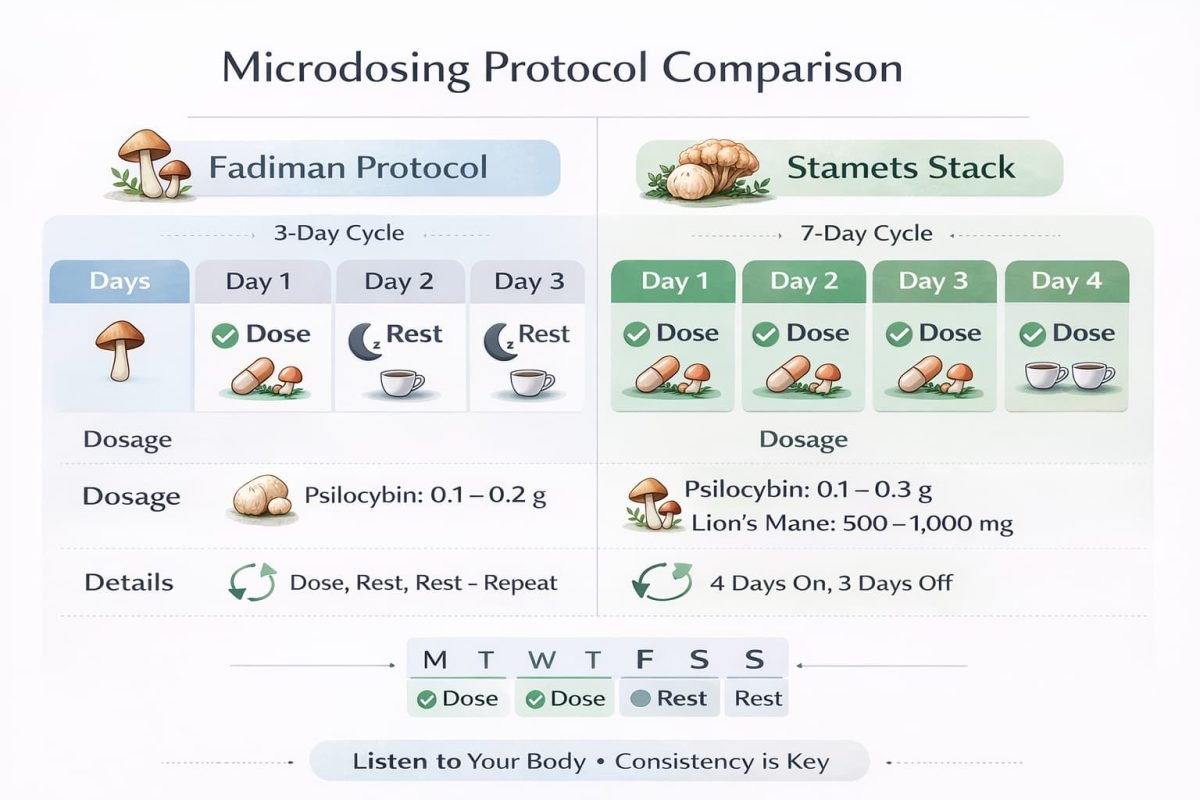
| Feature | Fadiman Protocol | Stamets Protocol |
|---|---|---|
| Structure | Every 3 days | 4 days on / 3 off |
| Frequency | Less frequent | More frequent |
| Rest Period | 2 days between doses | Weekly rest period |
| Approach | Spaced observation | Structured routine |
Both schedules are widely discussed, but neither is considered a standardized medical guideline.
Can Tolerance Develop?
One reason microdosing schedules include rest days is to reduce the possibility of tolerance buildup.
Tolerance refers to the body’s reduced response to repeated exposure to a substance over time.
Spacing doses may help:
- maintain sensitivity
- avoid continuous exposure
- support observation of effects
However, research into tolerance at microdose levels is still limited.
Choosing a Microdosing Schedule
Because research is still evolving, there is no universally accepted microdosing schedule.
Educational discussions often emphasize:
- starting with awareness and research
- understanding variability between individuals
- recognizing that responses may differ
In scientific contexts, researchers continue to study how different dosing patterns may influence outcomes.
Risks and Considerations

As with other aspects of psychedelic research, microdosing schedules come with uncertainties.
Important considerations include:
- individual sensitivity
- lack of standardized guidelines
- limited long-term research
- legal restrictions in many regions
Education and awareness remain key.
FAQ
What is a microdosing schedule?
A microdosing schedule refers to the timing pattern used to take small doses of psilocybin mushrooms over a period of time.
What is the Fadiman protocol?
The Fadiman protocol follows a 3-day cycle: one day dosing followed by two days without dosing.
What is the Stamets protocol?
The Stamets protocol typically follows a weekly pattern of four consecutive dosing days followed by three days off.
Which microdosing schedule is better?
There is no universally accepted best schedule, as research into microdosing is still ongoing.
Why are rest days included?
Rest days are often included to reduce potential tolerance and allow observation of effects.
Disclaimer
This article is for informational purposes only and does not constitute medical or legal advice. Psilocybin is a controlled substance in many jurisdictions.
Read Next
- Psilocybin Microdosing Guide
- Psilocybin Dosage Chart Explained
- Microdosing Benefits
- Set and Setting Guide
