

MICRODOSING
Psilocybin Dosage Chart Explained (2026)
Introduction
Understanding psilocybin dosage is one of the most important topics when learning about psychedelic mushrooms. Different dosage levels can produce dramatically different effects, ranging from subtle mood changes to powerful psychedelic experiences.
Because mushrooms vary widely in potency, researchers and educators often use general dosage ranges to explain typical effects. These dosage charts are designed to help people understand how different amounts may influence perception, mood, and cognition.
In psychedelic research, dosage awareness is also important for studying how psilocybin interacts with the brain. Universities and institutions such as Johns Hopkins University have conducted research exploring how psilocybin affects brain connectivity and mental health outcomes.
This guide explains the commonly discussed dosage ranges and what researchers currently understand about psilocybin dosing.
Psilocybin Dosage Chart
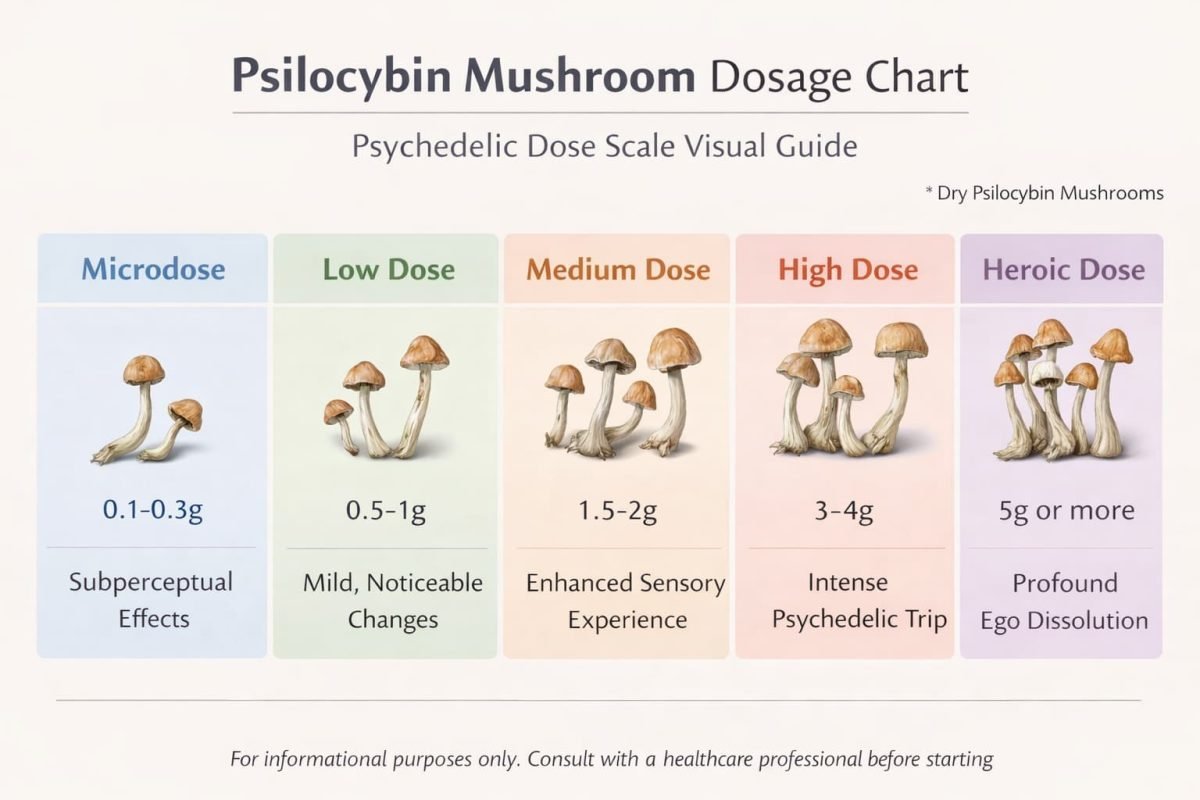
Educational dosage charts typically categorize psilocybin doses into several levels.
| Dose Level | Typical Amount (Dried Mushrooms) | Experience Intensity |
|---|---|---|
| Microdose | 0.05g – 0.3g | Subtle or barely noticeable |
| Low Dose | 0.3g – 1g | Mild perceptual changes |
| Moderate Dose | 1g – 2.5g | Clear psychedelic effects |
| High Dose | 2.5g – 5g | Strong psychedelic experience |
| Very High Dose | 5g+ | Intense psychedelic experience |
These ranges are approximate because potency varies depending on mushroom species and growing conditions.
What Is a Microdose?
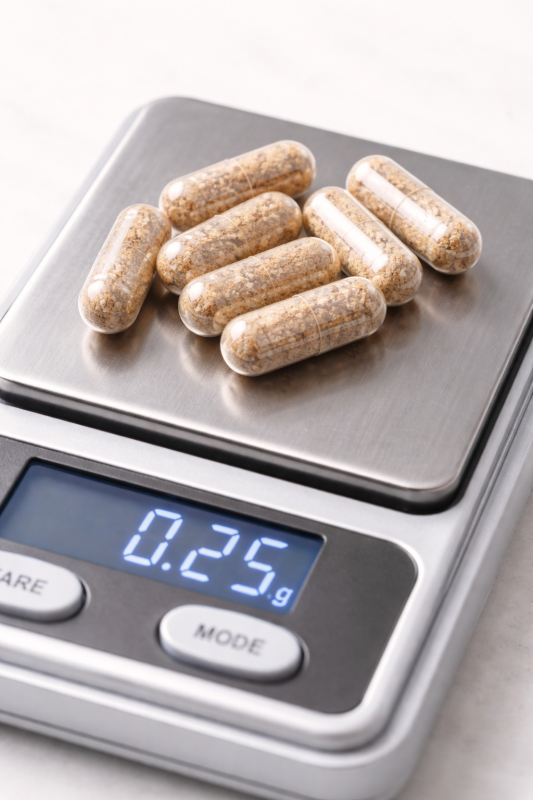
psilocybin microdose capsules on digital scale, macro photography, minimal background, educational science blog style
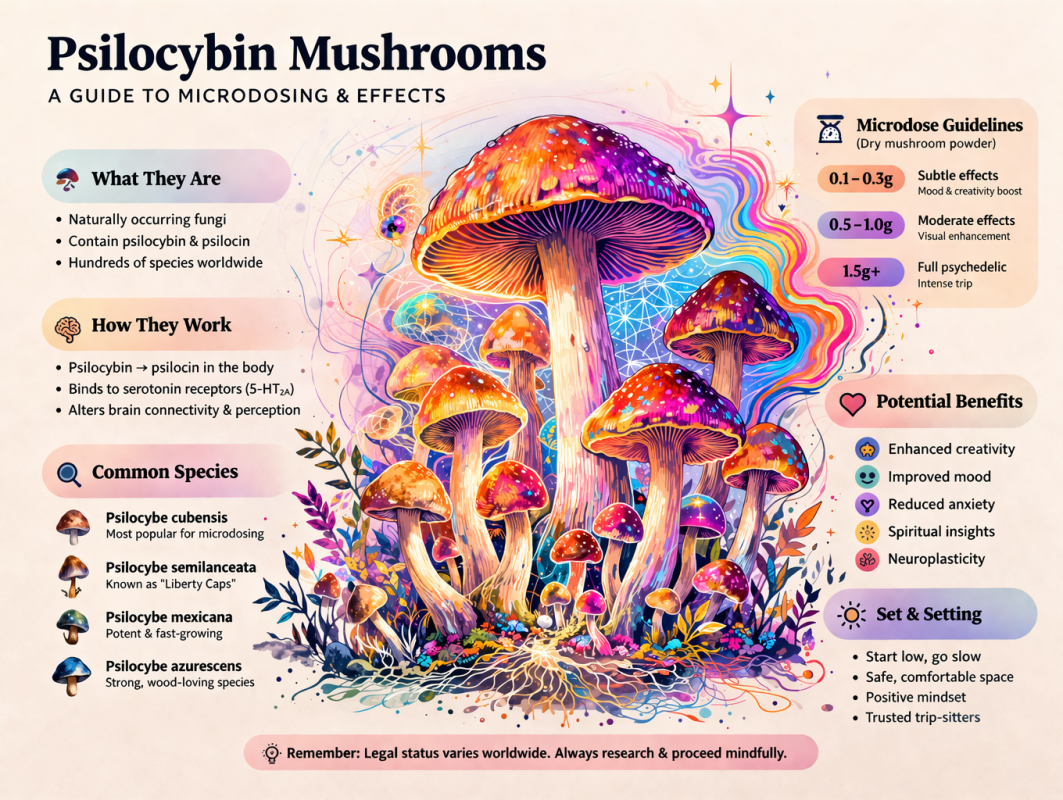
Higher psilocybin doses can produce intense psychedelic experiences.
These experiences may involve:
- significant sensory changes
- altered perception of time
- emotional intensity
- shifts in self-awareness
Scientific research into these experiences has contributed to growing interest in psychedelic-assisted therapy.
However, high-dose experiences can also be psychologically challenging for some individuals, which is why harm reduction education is important.
Why Dosage Education Matters
Understanding dosage ranges is essential for several reasons.
First, it helps researchers study how psychedelic compounds interact with the brain. Second, it promotes harm reduction awareness by helping people understand the differences between various dose levels.
In psychedelic science, dosage education is often paired with discussions about set and setting, which refers to a person’s mindset and environment during an experience.
Factors That Influence Psilocybin Dosage Effects
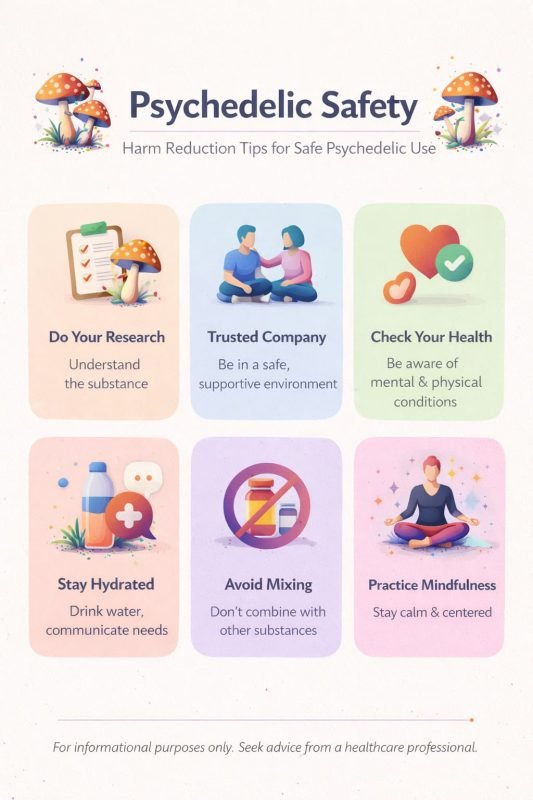
Several factors influence how psilocybin dosage may affect an individual.
Important variables include:
- mushroom species and potency
- individual biology
- mental state or expectations
- environment or surroundings
Because these factors vary widely, the same dosage may produce different experiences for different individuals.
FAQ
What is a psilocybin microdose?
A microdose usually refers to approximately 0.05–0.3 grams of dried mushrooms, which is intended to produce subtle psychological effects.
Why do dosage charts vary?
Mushroom potency varies depending on species, cultivation conditions, and individual sensitivity.
Does higher dosage mean stronger effects?
In general, larger doses tend to produce stronger psychedelic effects, although individual responses can vary.
Are dosage charts exact?
No. Dosage charts are educational tools and should be considered approximate ranges rather than exact measurements.
Why is dosage education important?
Understanding dosage ranges helps promote responsible psychedelic education and harm reduction awareness.
Disclaimer
This article is for informational purposes only and does not constitute medical or legal advice. Psilocybin is a controlled substance in many jurisdictions.
Read Next
Psychedelic Therapy Research Overview
Microdosing Schedule Explained
Set and Setting Guide
