Science and Reserach
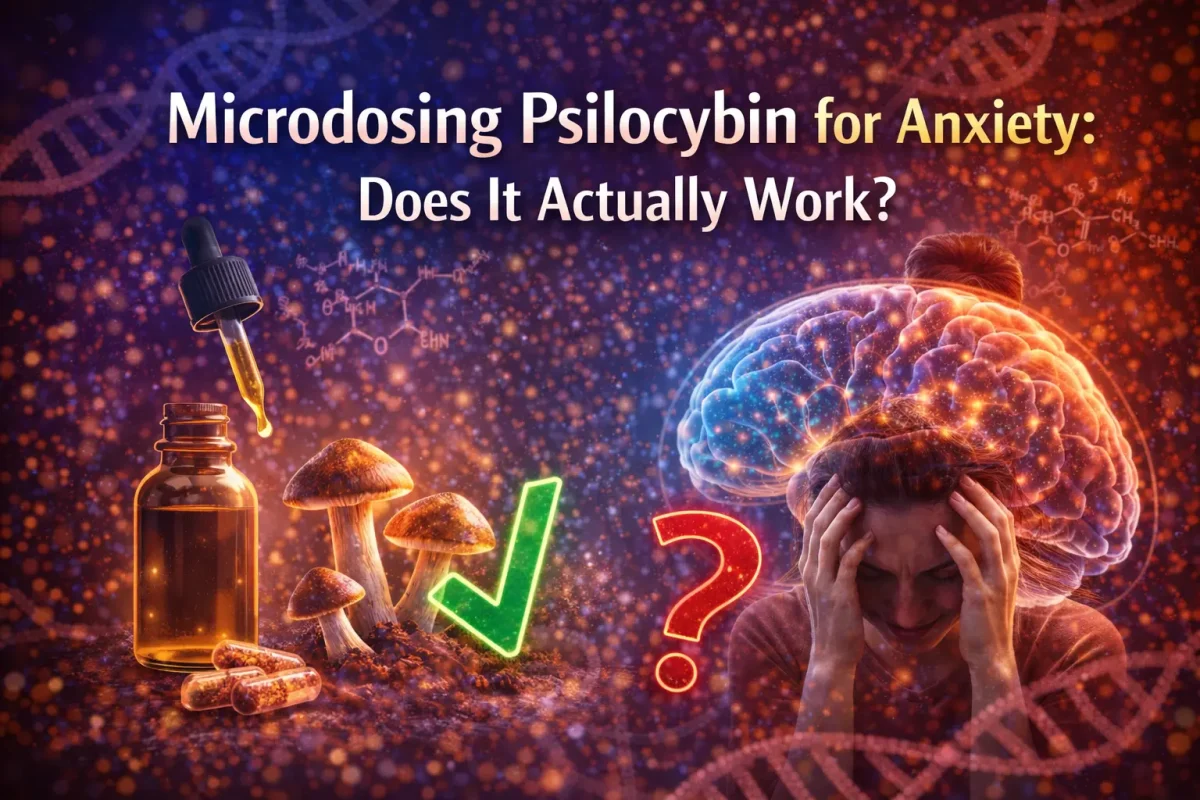
Microdosing Psilocybin for Anxiety: Does It Actually Work?
Mar
Introduction
Microdosing psilocybin for anxiety is the reason most people first try the practice — and the numbers back that up. A landmark 2026 RAND study found that an estimated 10 million US adults microdosed a psychedelic substance in 2025, with managing anxiety and depression ranking as the top motivations across the board.
That’s not a fringe wellness trend. That’s a public health signal.
But does it actually work? The honest answer depends on who you are, how you dose, and what you’re actually taking. This article gives you the research-backed picture — what the science says, who benefits most, when it backfires, and exactly how to set yourself up for a positive experience. If you’re ready to start, our 30-Day Microdosing Beginner Plan is the hands-on companion to everything below.
Why People Turn to Microdosing for Anxiety
Anxiety disorders affect an estimated 40 million US adults every year. SSRIs help many of them — but a significant proportion experience side effects, insufficient relief, or simply don’t respond at all. That gap is where interest in sub-perceptual psilocybin dosing has exploded.
The appeal is neurologically logical. Psilocybin activates the same serotonin receptors SSRIs target — but through a completely different mechanism. It reduces activity in the amygdala, the brain’s alarm system. It quiets the rigid, overactive thought loops of the default mode network — the neurological signature of chronic anxiety. Even at doses too small to produce any perceptual effect, some of those mechanisms may still be operating.
The full science is covered in our Psilocybin Brain Research guide. The short version: psilocybin turns down the volume on the brain circuits that generate anxiety. The question is whether sub-perceptual doses do it meaningfully enough to matter in daily life.
Can Microdosing Psilocybin Actually Reduce Anxiety?
What Large Studies Show
The most compelling data comes from real-world microdosers tracking their own experience over time.
A landmark study in Scientific Reports by Rootman et al. surveyed over 4,000 microdosers and 4,600 non-microdosing controls through a mobile app. Microdosers with mental health concerns reported significantly lower levels of anxiety, depression, and stress than controls — across all genders and age groups. A 2025 systematic review of multiple observational studies found consistent improvements in psychological wellbeing, emotional stability, and anxiety reduction among those who microdosed consistently.
🔗 Authority Source: Microdosers Report Lower Anxiety & Depression — Scientific Reports, Rootman et al.
These are large datasets pointing consistently in one direction.
What Controlled Trials Show
Controlled trials are more cautious. A 2026 meta-analysis of 14 studies found mixed anxiety outcomes and noted that expectation effects — the placebo response — likely play a meaningful role in self-reported improvements.
That doesn’t invalidate the observational data. Placebo response is clinically real and genuinely valuable. But it does mean the dramatic benefits reported by many microdosers may not be purely pharmacological — and it’s a reason to approach the practice with realistic expectations rather than guaranteed outcomes.
🔗 Authority Source: US Psychedelic Use & Microdosing in 2025 — RAND Survey
The honest summary: real-world evidence is encouraging, controlled trial evidence is mixed, and both things are true at once.
What Sub-Perceptual Dosing Actually Does to Anxiety
Even the more cautious assessments point to a few mechanisms that hold up across multiple studies.
Low-dose psilocybin reduces neuroinflammation — and neuroinflammation drives a significant proportion of anxiety and depressive disorders. It loosens the rigid default mode network loops that make anxiety feel inescapable. And consistently, microdosers report improvements in psychological flexibility — the ability to sit with uncertainty without spiralling — which is one of the core therapeutic targets in evidence-based anxiety treatment.
Many people report not a complete absence of anxiety, but a raising of their emotional baseline. Difficult feelings feel more manageable, less catastrophic, more temporary. That softer shift doesn’t always show up in clinical scales — but it shows up in journal entries, in conversations, in people returning to lives they had started to shrink.
When Microdosing Makes Anxiety Worse
This part matters as much as everything above.
For some people, microdosing psilocybin for anxiety doesn’t reduce it — it amplifies it. Doses that drift from sub-perceptual into threshold territory can increase sensory sensitivity, emotional intensity, and agitation in ways that feel threatening to an already anxious nervous system.
The warning signs are clear: racing thoughts, heightened sensory awareness, increased heart rate, emotional intensity that feels uncomfortable. Any of these means your dose is too high — often by just 50mg. Come down, not up.
This is why starting at 0.05–0.1g — and never skipping your off-days — is non-negotiable for anxiety-prone individuals. The Fadiman Protocol’s two rest days aren’t optional recovery time. They’re the safety architecture of the whole approach. Our Harm Reduction Guide covers every contingency in detail.
Dosing for Anxiety: What to Take & Where to Start
Getting the dose right is everything. Too high and you’ve triggered the thing you were trying to treat. Too low and nothing happens. The sweet spot for anxiety specifically is 0.05–0.1g of dried psilocybin mushrooms — the conservative end of the standard microdose range.
This is where product quality becomes critical.
Potency varies dramatically between strains and batches. A dose that feels genuinely sub-perceptual with a mild strain like Golden Teacher may be a threshold dose with higher-potency varieties. Unverified products — especially smoke-shop mushroom edibles — carry real risks of mislabeling and synthetic adulterants. That’s not a theoretical concern. It’s documented in peer-reviewed research.
The Shroom Sage’s Microdosing Capsules solve this problem at the source. Each capsule is precision-dosed at 0.1g of lab-tested dried psilocybin — the ideal starting dose for anxiety-focused microdosing — with strain and potency verified independently. No scales, no guesswork, no batch variation. Just a consistent, reliable dose every time.
If you prefer to work with dried mushrooms and dose yourself, our Dried Psilocybin Mushrooms are lab-tested for potency and available in the most beginner-friendly strains — including Golden Teacher, the most widely recommended starting point for anxiety-focused protocols due to its gentle, predictable onset.
For everything you need to start in one place, the Shroom Sage Microdosing Starter Kit includes lab-tested capsules, a precision scale, a printed protocol guide, and access to our private integration community — everything a first-timer needs to do this properly.
Who Benefits Most from Microdosing for Anxiety
The evidence points most clearly to three groups:
People with generalised or chronic low-level anxiety — not acute panic or severe clinical disorder, but the persistent background hum of stress and worry that wears life down. This is the most common use case and the one with the most consistently positive real-world data.
People who’ve had poor results with SSRIs — whether due to side effects, insufficient response, or emotional blunting. The observational studies suggest this group sees particularly meaningful benefits from sub-perceptual psilocybin dosing.
People combining microdosing with other practices — therapy, journaling, meditation, or consistent physical activity. Microdosing as a standalone pharmaceutical swap produces less consistent outcomes than microdosing as a catalyst within a broader wellness framework.
The Bottom Line
Microdosing psilocybin for anxiety won’t be the right answer for everyone. But for many people — particularly those with generalised anxiety, a history of SSRI side effects, or chronic stress that hasn’t responded to conventional approaches — the evidence suggests a genuine chance of meaningful relief.
The difference between a good experience and a difficult one almost always comes down to three things: the right dose, the right product, and the right expectations. Get those in place before your first dose day, not after.
Before anything else — check where you stand legally. Our Psilocybin Legality by State 2026 guide is updated quarterly and covers every US state.
Frequently Asked Questions (FAQ)
Q: Does microdosing psilocybin help with anxiety? Microdosing psilocybin for anxiety shows genuinely encouraging results in large observational studies, with microdosers consistently reporting lower anxiety and stress than non-microdosing controls. Controlled trial data is more mixed. Individual response varies — dose, product quality, and protocol compliance are the biggest determining factors.
Q: What dose of psilocybin should I start with for anxiety? Start at 0.05–0.1g of lab-tested dried psilocybin mushrooms. This is the conservative end of the standard range and the right starting point for anxiety-prone individuals. The Shroom Sage’s precision-dosed Microdosing Capsules at 0.1g are ideal for consistent, predictable dosing.
Q: Can microdosing make anxiety worse? Yes, if the dose is too high. Doses that drift into threshold territory can increase sensory sensitivity and emotional intensity in anxiety-prone people. Start at the minimum, follow the Fadiman Protocol’s off-days strictly, and reduce by 50% at the first sign of increased anxiety.
Q: How long before microdosing helps anxiety? Most people report initial shifts within 2–4 weeks. Sustained, meaningful changes typically emerge after 8–12 weeks of consistent practice. Always track with a daily journal — gut feelings about progress are unreliable when managing anxiety.
Q: Can I microdose if I’m on anxiety medication? Speak to a healthcare provider first. SSRIs can blunt psilocybin’s effects by reducing receptor availability. MAOIs can amplify effects dangerously. Never adjust psychiatric medications without medical guidance.
⚠️ Disclaimer: This article is for educational purposes only and does not constitute medical advice. Psilocybin remains a federally controlled substance in the United States. Always consult a qualified healthcare professional before making changes to your mental health treatment. Nothing here constitutes a recommendation to use psilocybin outside of applicable legal frameworks.
→ Read Next on The Shroom Sage:
- How to Start Microdosing: A 30-Day Beginner Plan
- The Science Behind Psilocybin & the Brain: What 2026 Research Says
- The Ultimate Harm Reduction Guide for Psychedelic Mushroom Trips
- Psilocybin Legality by State in 2026: The Complete Updated Map
